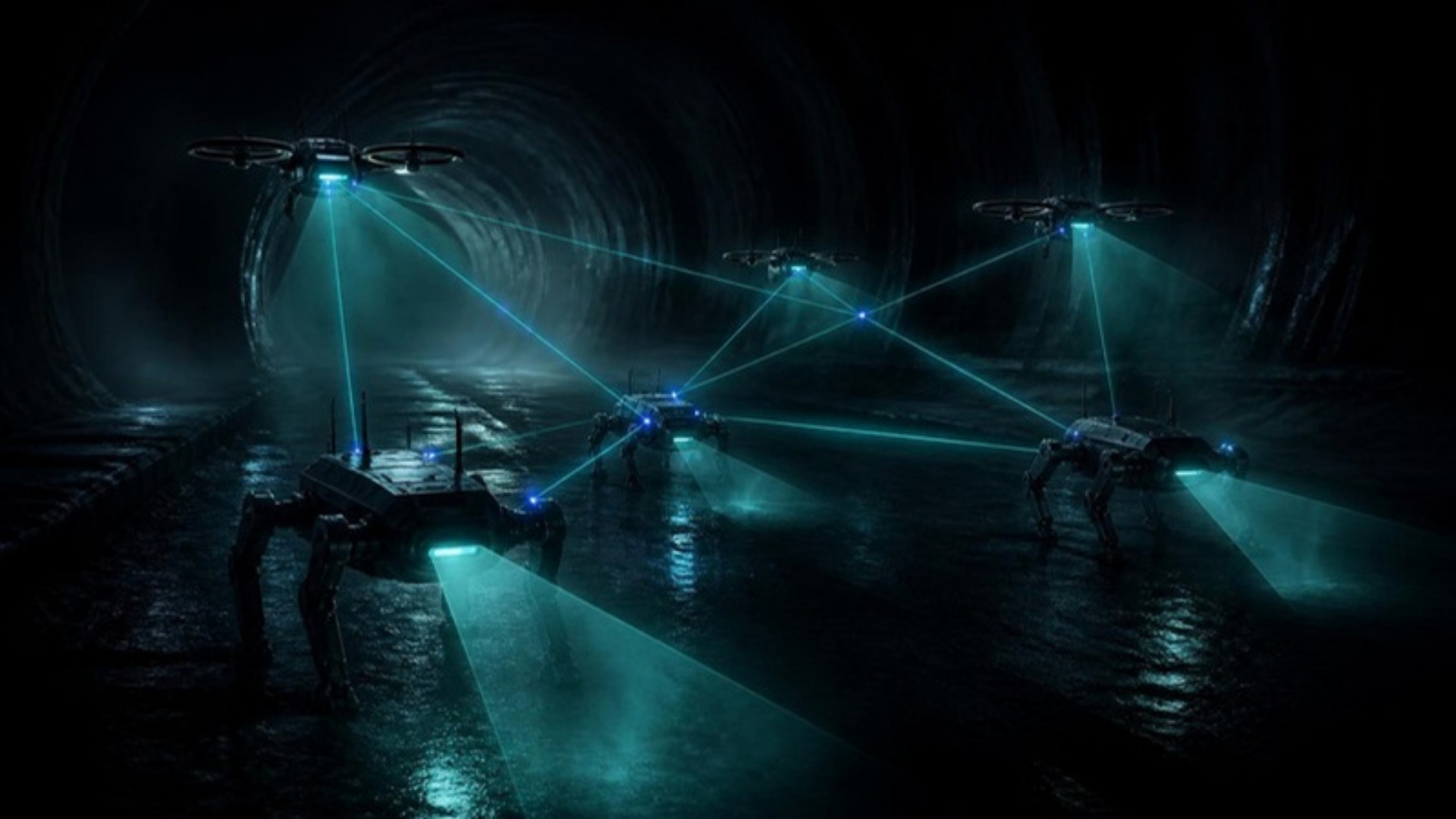
Beyond the World Model · Edge-native

Many robots.
One mind.

A world model lets one robot understand its surroundings. Borgswat goes beyond it: robots pool the GPU on board each unit and share what they see, so the whole team sees more, reasons faster and keeps moving with no cloud.

N × GPUPooled on-board inference
360°Shared team perception
0Cloud round-trips required
The problem

A lone robot is short-sighted and under-powered.

Each robot carries one set of sensors and one edge GPU. That is too little compute for a rich world model and too few viewpoints to see around corners. Sending everything to the cloud adds latency and bandwidth costs, and the robot stops dead when the connection drops.

Single robot + cloud

  • One viewpoint, many blind spots
  • Edge GPU idle half the time, maxed the other half
  • 100+ ms round-trips to a data center
  • Loses its brain when the network drops

Borgswat team

  • Every robot is an eye for every other robot
  • Idle GPUs across the team become one inference pool
  • Decisions made locally, peer-to-peer, in milliseconds
  • Keeps operating fully offline
Beyond the world model

One robot has a world model. The team has something more.

A world model is one robot's private picture of its surroundings. Borgswat fuses every robot's sensors and compute into a single, continuously updated model that spans the whole team — one no single robot could build or run alone. Every member can read it, reason over it and act on it.

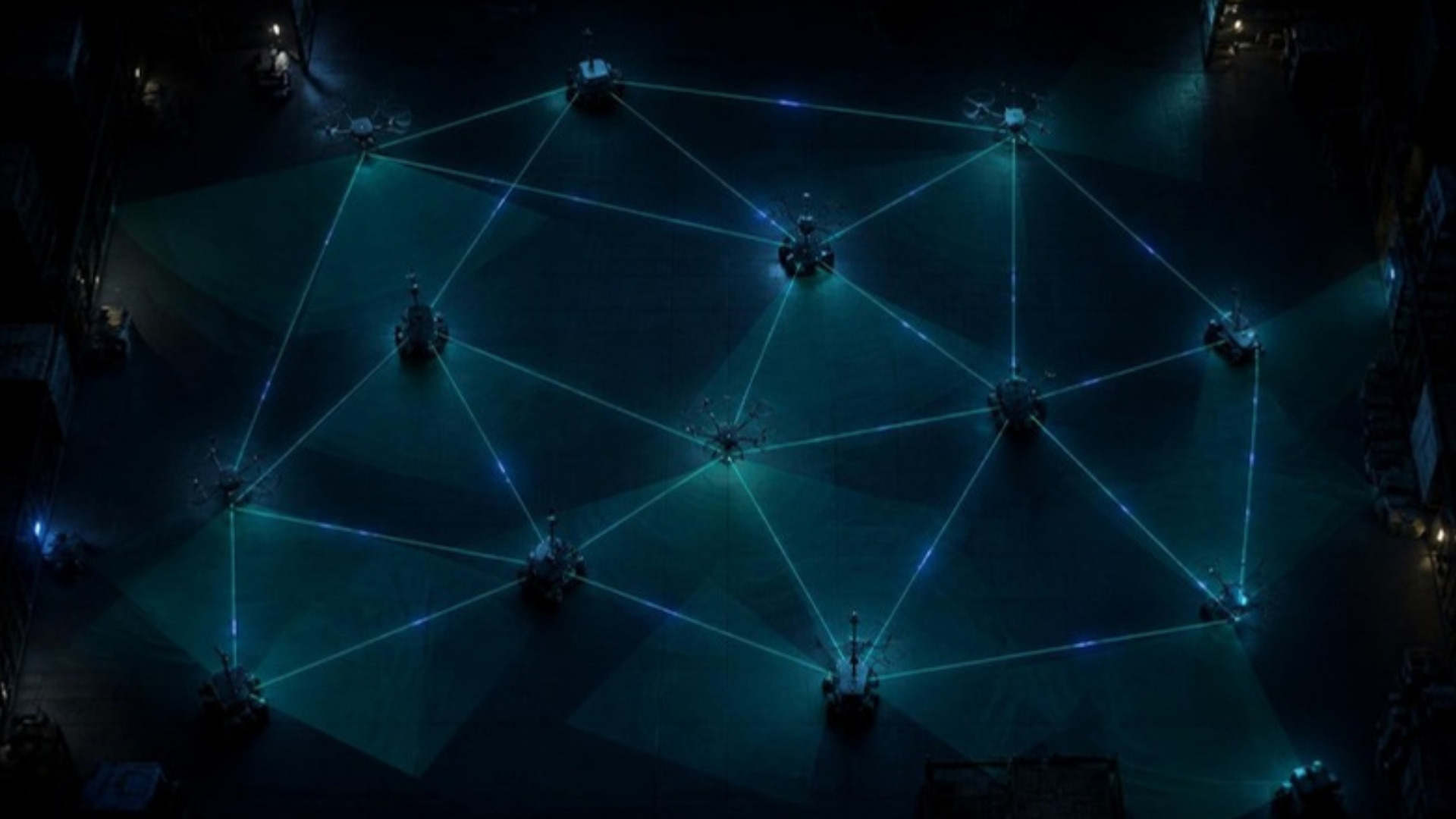
Top-down view of twelve robots on a warehouse floor, linked by a glowing mesh network; their overlapping view cones cover the whole floor
Twelve robots. One field of view.Shared perception · Pooled GPU · No uplink
01

Pooled GPU inference

Inference jobs are split and scheduled across the edge GPUs of the whole team. Ten small robots together run models none of them could run alone.

02

Shared perception

One robot's camera is another robot's eye. Views from many angles are fused into a single scene, so occlusions and blind spots disappear.

03

Cloud-free autonomy

The swarm is its own data center. No uplink is needed to perceive, plan or adapt, so the mission continues in tunnels, warehouses, disaster zones or contested airspace.

How it works

From scattered sensors to a collective mind.

Discover

Robots find each other over a local mesh and advertise their sensors, position and spare GPU capacity.

Fuse

Compact observations, not raw video, are exchanged and merged into a shared latent world state.

Distribute

Prediction and planning workloads are sharded to whichever peers have the headroom right now.

Act

Each robot acts on the team's view of the world. If a robot drops out, the rest re-balance the work and keep going.

# borgswat mesh · live
swarm.peers        8 online   // mesh, no uplink
swarm.gpu_pool     8 × edge GPU → 1 pool
swarm.world_model  synced     // shared latent state

robot-03  view: occluded  → borrowing eyes of robot-06
robot-05  gpu:  94%       → offloading plan to robot-01
robot-07  link: lost      → load re-balanced across 7 peers

cloud              not required
A

Hardware-agnostic

Built to run on the edge GPUs already inside AMRs, drones, quadrupeds and humanoids.

B

Bandwidth-aware

Robots exchange compact embeddings instead of raw streams, so modest local links are enough.

C

Fault-tolerant by design

No leader, no single point of failure. The swarm re-forms whenever members join or leave.

D

Private by default

Sensor data stays inside the team and on site. Nothing has to leave for a third-party cloud.

Use cases

Wherever robots work in teams.

Logistics

Warehouses & fulfillment

AMR fleets share one live map of aisles, people and pallets, and route around each other's blind spots.

Public safety

Search & rescue

Drones and ground robots map collapsed or underground sites together, where there is no signal.

Industry

Inspection & energy

Teams cover plants, pipelines and wind farms from many angles at once, and process the data at the edge.

Agriculture

Field robotics

Robots across a field act as one sensing and decision network, far from any data center.

The future of robotics isn't a smarter robot.
It's a smarter team.
— Borgswat
Early access

Build the swarm with us.

We're working with robotics teams, OEMs and research labs on early deployments. Tell us about your fleet.

info@borgswat.com →